
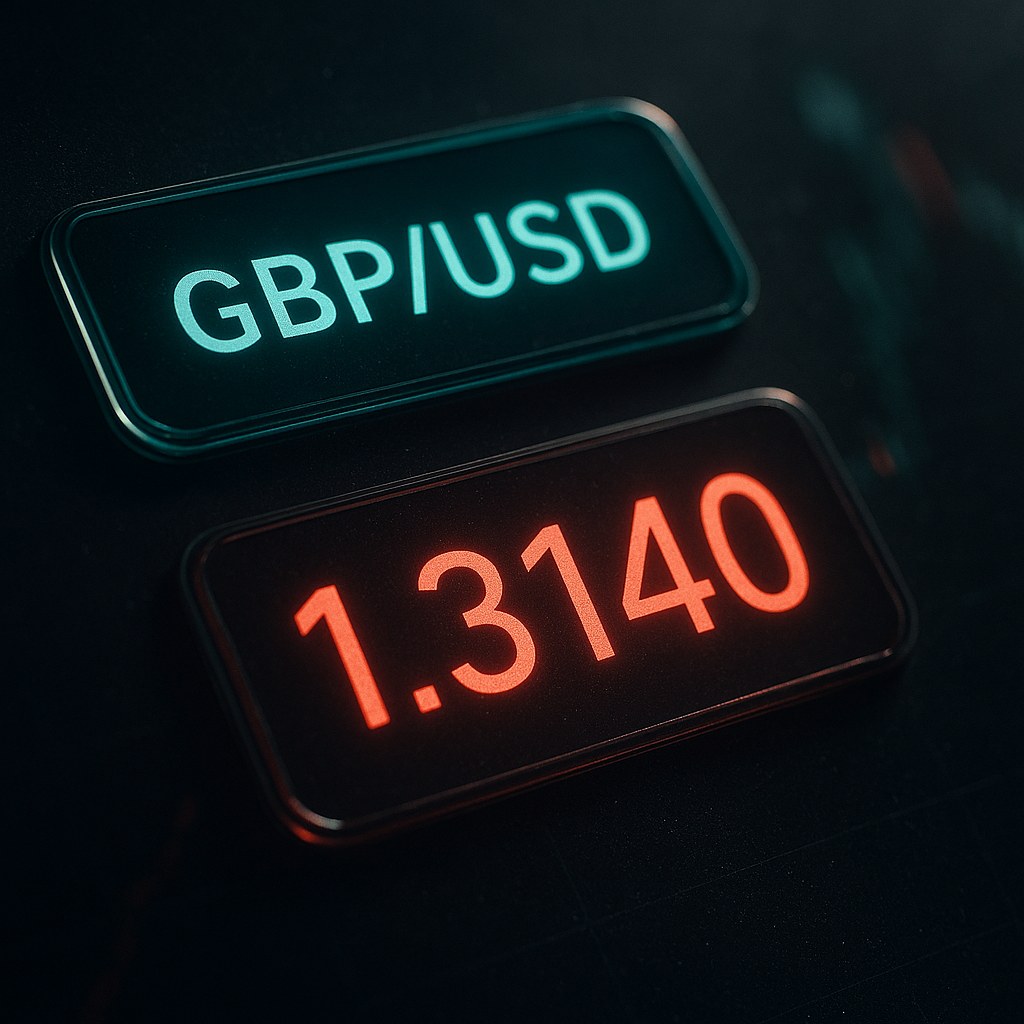
GBP/USD 1.3140 isn’t just another quote on your screen — it’s a level that can change the math for travellers, exporters and FX hedgers overnight. The pair testing 1.3140 represents a tactical battleground: it can define short-term positioning for traders and determine whether a business meets budgeted dollar receipts. This article explains why that specific rate matters, what to expect near-term, and practical ways to lock or simulate exposure around 1.3140.
Read on for a trader-focused breakdown of the technical and economic drivers, a step‑by‑step guide to forward and option hedges, real-world case studies, and a lightweight interactive simulator to compare 1.3140 against live mid-market quotes. The thesis: understanding how 1.3140 translates into real money is the difference between a reactive reaction and a planned outcome.
Understanding the Crucial Level of 1.3140 for GBP/USD
Why 1.3140 is a tactical level
In FX trading, round and precise quotes attract attention because they concentrate orders and stop logic. 1.3140 functions as a reference point where technical traders place entries or exits, and where algorithmic flows can cluster. The result is that price behaviour around this precinct tends to be more volatile and informative than in quieter zones.
What 1.3140 means in practical terms
For travellers and businesses, 1.3140 is a conversion rate: each British pound buys 1.3140 US dollars. Practically, if an exporter invoices in dollars, moving from 1.3000 to 1.3140 increases dollar receipts per pound. For a £10,000 traveller budget, a change of 0.0140 in the GBP/USD rate alters the dollar amount available by a calculable sum — the difference is immediate and tangible. Businesses should map budget lines to small FX moves because even modest shifts can affect margins on large invoices.
GBP/USD Exchange Rate: Current Status and Historical Data
Price context matters. The pair is currently testing the 1.3140 level after recent moves driven by macro data and central bank commentary. Traders should view this as a short-term test rather than a lasting regime change: the market’s reaction — whether it respects 1.3140 as support or resistance — will set the next tactical tone.
Historic behaviour around similar levels shows clustered activity, where momentum trades and corporate flows intersect. Monitor US economic releases and Bank of England communications closely: these tend to be the primary near-term drivers of directional conviction for GBP/USD.
GBP/USD Forecast: What Lies Ahead for the Next Week
Near-term direction will hinge on incoming macro prints and risk appetite. Expect volatility around scheduled US and UK data releases and central bank speak. If the US economic backdrop surprises to the upside, dollar strength may push the pair below 1.3140; conversely, softer US prints or stronger UK data can give GBP the edge.
Technically, a clean break and hold above 1.3140 would encourage short-covering and attract momentum buyers; failure to sustain it would favour range-bound or downside scenarios. Traders should remain nimble and manage position size: news-driven spikes are common in this environment.
Locking in the Rate: Forward Contracts and Options Explained
Businesses that need certainty can use forward contracts or options to lock a GBP/USD rate near 1.3140. Below is a practical, non-exhaustive guide to the mechanics and decisions involved.
- Define exposure: identify the currency amount, value date and acceptable rate range. This anchors the hedge decision.
- Forward contract: agree today to exchange pounds for dollars at a fixed forward rate for settlement on the agreed date. Forwards remove spot risk but carry counterparty and liquidity considerations.
- Options: buy a currency option that gives the right, not the obligation, to exchange at a strike close to 1.3140. Options cost a premium but preserve upside if rates move favourably.
- Execution approach: consider layered hedges (partial forward + option) to balance cost and flexibility.
- Documentation and credit: ensure your provider’s terms, settlement instructions and credit limits are clear before committing.
Always consult a qualified FX or treasury advisor about instrument suitability and costs. Hedging removes spot uncertainty but introduces contract, market and counterparty risk.
1.3140 vs Mid-Market Rates: Impact on Transfer Fees
Mid-market rate is the interbank reference between buyers and sellers. Retail providers quote customer-facing rates that deviate from mid-market to cover costs and add margin. The practical effect: for a given transfer, the difference between receiving dollars at 1.3140 and the mid-market rate determines the implicit FX fee.
To assess impact across providers, compare the delivered USD amount for your transfer size after fees and applied rate. Even small basis differences can be meaningful on large transfers. Use the interactive simulator below to input your transfer amount and compare outcomes using a live mid-market quote or a hypothetical figure.
Real-World Success Stories: Businesses and Individuals Leveraging 1.3140
Case study — SME exporter: An SME with a scheduled $200,000 receipt hedged half its exposure using a forward near 1.3140 and left the remainder unhedged. The locked portion protected operating cash flow, while the unhedged part captured favourable swings. The key lesson: partial hedges balance protection and opportunity.
Case study — private individual: A UK-based student locking a tuition payment used a short-dated option with a strike around 1.3140 to cap worst-case cost while retaining upside if GBP strengthened. The premium was a small component of the tuition bill and provided budgeting certainty.
Interactive Tool: Simulating the Financial Impact of GBP/USD Rates
Use this simple simulator to compare dollar proceeds at 1.3140 versus any other rate. Enter a GBP amount and a comparator rate to see the dollar difference.
STB’s Expert Trading Strategies for GBP/USD
Short-term traders often combine technical levels with macro cues: use 1.3140 as an anchor for risk sizing, place stop and limit orders beyond recent price structure, and adjust exposure around scheduled data releases. Longer-term participants align hedges with cash-flow timing and treasury policy.
Risk management essentials: size positions to a fixed percentage of equity, set clear stop levels, and avoid excessive leverage. CFDs and leveraged products magnify both gains and losses; always consider capital at risk and use protective orders. For educational resources on execution and risk management, see /academy/courses/forex-trading and for peer discussion consult /society/community-forum/gbp-usd.
Frequently Asked Questions
What is the current GBP/USD exchange rate?
Markets are dynamic; the pair is currently probing the 1.3140 area. For a live quote check your trading platform or a trusted market data provider because spot prices change continuously during trading hours.
What is the GBP/USD forecast for the next week?
Expect direction to be guided by UK and US macro releases and risk sentiment. The path will depend on data surprises and central bank commentary; a sustained move above or below 1.3140 is the clearest short-term signal. Maintain flexible position sizing to handle news-driven volatility.
What is a good trading strategy for GBP/USD?
Combine a macro checklist with technical confirmation: define a thesis (data or rate-driven), use 1.3140 as a tactical reference, manage stop-losses and position size, and avoid overleveraging. Incorporate news windows into trade timing and treat risk management as the priority.
How can I lock in a GBP/USD rate of 1.3140 using forward contracts or options?
To lock a rate, approach a bank or FX provider and agree a forward contract that fixes the exchange for a future date. Alternatively, purchase a currency option with a strike near 1.3140 to hedge downside while retaining upside. Confirm settlement terms and costs before execution and seek professional guidance for complex needs.
How does the 1.3140 rate compare to mid-market rates for transfer fees?
1.3140 may be at, above or below the mid-market quote offered by providers. The effective fee equals the difference between the provider’s delivered rate and the mid-market rate, plus explicit charges. Use the simulator above or provider comparisons to quantify the impact for your transfer size.
Conclusion
1.3140 is an actionable reference point for both traders and corporate treasuries. Whether it acts as support or resistance will define tactical flows in the short run; for businesses, converting that quote into budget certainty requires a deliberate hedging plan. Use the approaches outlined here to translate a price level into a risk-managed decision.
For those seeking structured allocation options, STB Investment’s PAMM framework and Copy Trading services can provide a managed way to participate in FX strategies; for education, see /academy/courses/forex-trading. Remember: leveraged FX instruments carry risk — only trade within your risk tolerance and after appropriate due diligence.
آماده شروع معامله هستید؟
آنچه آموختید را در عمل پیاده کنید.